Can we slow, stop or reverse your myopia?
We need your help to see if we can using a non-invasive, behavioral based approach. The study is grounded in the latest vision research on the role of ON pathways in human vision and the role of weak retinal ON pathways in myopic individuals. We are recruiting children and adults in Fairfield County, Connecticut.The study works with participants to evolve their visual habits and behaviors in the clinic and at home. The study aims to better understand and evaluate how targeted, non-invasive strategies can help address the escalating prevalence of myopia.By 2050, it is estimated that nearly half of the global population will have myopia (the inability to see far objects clearly).
Main Website: www.cteyecareassociates.com | Office: 203-255-4005 | Study Team Email: team@myopiastudyeca.com | 2600 Post Road, Southport, CT 06890
CT Office Locations: Southport, Norwalk, Trumbull and Stamford | Study Site Approved by Sterling IRB, IRB ID: 11655 | Copyright 2026
Myopia Study FAQs
What is Myopia? (also known as Near Sightedness)
Myopia is a vision condition in which people can see close objects clearly, but objects farther away appear blurred.
There are risks associated with myopia progression, such as retinal detachments, myopia macular degeneration and cataracts.
What is the Purpose of the Study?
The purpose of the study is to slow, stop or reverse myopia progression in children and adults as measured by
eye axial length and auto-refraction.Does this clinical study have IRB approval?
Yes. Approved by Sterling IRB, IRB ID: 11655.
Who Is Eligible To Participate?
High level eligibility criteria includes:
- Between the ages of 8-12 (child) or 18-44 (adult) and in good general health
- Wear glasses or contact lenses
- Glasses or contact lens prescription is between -1 diopter and -4 diopters and astigmatism of <=1 diopter
- No previous use or current plans to start a myopia control program in the next 6 months.
Common myopia control programs include: Atroprine, Orthokeratology, MiSoft Contact Lenses, specialty glasses
(e.g., HAL, DIMS, DOT, PALS, prismatic bifocals, etc.)
- Additional eligibility criteria or questions can be reviewed with a study team member.
What Are the Costs to Participate?
Qualified participants who enroll will receive study-related treatment, tests and assessments at no cost.
What will I be required to do if I join the study?
Participation consists of three phases:
Screening - to determine eligibility and agreement to participate
Treatment - In office treatment which involves, building stronger visual functioning, healthier visual habits indoors and outdoors
and completing tests/assessments
Monitoring - periodic tests/assessments and brief lifestyle questionnaire
How Long Does Study Participation Last?
• Weekly 30 min. office visits for 16 weeks
• Monitoring visits over the following 18 months include 2 visits for adults and 4 visits for childrenWhere are the study locations in Fairfield County, Connecticut?
Southport (primary site), Norwalk and Trumbull.What is the Scientific Rationale for the Treatment Program?
A growing body of research demonstrates weak ON visual pathways in myopic individuals cause deficits
in pupil constriction, image-retina stabilization and contrast sensitivity which may then increase myopia in
affected individuals. Recent studies also demonstrate that bright surfaces, self motion, visual stimulation and
the ability to take in sharp images at distance stimulate ON visual pathways. The study treatment program
aims to change the visual diet and habits of study participants to see if myopia can be slowed, stopped or reversed
in treated individuals.
Scientific References - Highlights Only
A complete list of scientific references is available for interested participants, please email team@myopiastudyeca.com.
Global Prevalence of Myopia and High Myopia and Temporal Trends from 2000 through 2050. Holden BA, Fricke TR, Wilson DA, Jong M, Naidoo KS, Sankaridurg P, Wong TY, Naduvilath TJ, Resnikoff S., Ophthalmology, 2016
Maharjan, U., Rahimi-Nasrabadi, H., Poudel, S., Olianezhad, F., Jin, J., Dul, M., Alonso, J.M. (2026) Human accommodative visuomotor function is driven by contrast through ON and OFF pathways and is enhanced in myopia. Cell Reports DOI: 10.1016/j.celrep.2026.116938
Pons, C, Mazade, R. , Jin, J, Dul, M., Alonso, JM. (2025). Optical defocus affests differently ON and OFF visual pathways. iScience https:/cell.com/iscience/fulltext/S2589-0042
Contrast in ON-OFF pathway in human myopia. Poudel, Nasrabadi, Jin, Dellostritto, Dul, Viswanathan, Alonso, Journal of Neuroscience, 2024.
Insights Into Myopia from Mouse Models. Mazade R, Palumaa T, Pardue M, Annual Review of Vision Science, 2024.
Differences in visual stimulation between reading and walking and implications for myopia development, Poudel, Nasrabadi, Jin, Najafian, Alonso, Journal of Vision, 2023.
Shedding light on myopia by studying complete congenital stationary night blindness. Zeitz, et al. Progress In Retina and Eye Research, 2023.
Image luminance changes contrast sensitivity in visual cortex. Rahimi-Nasrabadi H, Jin J, Mazade R, Pons C, Najafian S, Alonso JM, Cell Reports, 2021.
Cortical mechanisms of visual brightness. Mazade R, Jin J, Rahimi-Nasrabadi H, Najafian S, Pons C, Alonso JM, Cell Reports, 2022.
Functional Specialization of ON and OFF Cortical Pathways for Global-Slow and Local-Fast Vision. Mazade R, Jin J, Pons C, Alonso JM, Cell Reports, 2019.
Motion changes response balance between ON and OFF visual pathways. Luo-Li G, Mazade R, Zaidi Q, Alonso JM, Freeman AW, Communications Biology, 2018.
Amblyopia Affects the ON Visual Pathway More than the OFF. Pons C, Jin J, Mazade R, Dul M, Zaidi Q, Alonso JM, Journal of Neuroscience, 2019.
Neuronal mechanisms underlying differences in spatial resolution between darks and lights in human vision. Pons C, Mazade R, Jin J, Dul MW, Zaidi Q, Alonso JM, Journal of Vision, 2017.
ON pathway mutations increase susceptibility to form-deprivation myopia. Chakraborty R, Park H, Hanif A, Sidhu C, Iuvone P, Pardue M, Experimental Eye Research, 2015.
Neuronal and perceptual differences in the temporal processing of darks and lights. Komban SJ, Kremkow J, Jin J, Wang Y, Lashgari R, Li X, Zaidi Q, Alonso JM, Neuron, 2014.
Neuronal nonlinearity explains greater visual spatial resolution for darks than lights. Kremkow J, Jin J, Komban SJ, Wang Y, Lashgari R, Li X, Jansen M, Zaidi Q, Alonso JM, Proceedings of the National Academy of Sciences (PNAS), 2014.
Faster thalamocortical processing for dark than light visual targets. MayJin J, Wang Y, Lashgari R, Swadlow HA, Alonso JM, Journal of Neuroscience, 2011.
High susceptibility to experimental myopia in a mouse model with a retinal on pathway defect Pardue M, Faulkner A,Yin H, Schaeffel F, Williams R, Pozdeyev N, Iuvone P, Investigative Opthamology & Visual Science, 2008.
Refractive compensation to optical defocus depends on the temporal profile of luminance modulation of the environment. Crewther D P, Crewther, S G Neuroreport, 2002.
Research News on the Study Approach
SUNY Optometry Press Release, February 2026
New research suggests myopia is driven by how we use our eyes indoors.
Cell Reports, Video Abstract, February 2026
National Academy of Sciences News Release, Myopia: Causes, Prevention, and Treatment of an Increasingly
Common Disease, 2024,
Report Sections of ON/OFF visual pathways and implications for myopia
- Section 5, Onset and Progression of Myopia, pp. 95-133
- Section 6, Myopia Pathogenesis: From Retinal Image to Scleral Growth, pp 161-190
- Section 7, Current and Emerging Treatment Options for Myopia, pp 231-236
NIH>National Eye Institute News Release, Reading and Visual Health, 2023
Video below highlights difference between reading vs. walking.
Sign Up Now To Share Your Interest
Share your contact details below and submit the form. We will be in touch within the same business day.General Eligibility Requirements
Prospective participant is 8-12 (child) or 18-44 (adult) in age.
Wears glasses or contact lenses and has a prescription strength of between -1.00 diopter and -4.00 diopters
No previous use or current plans to begin a myopia control program in the next 6 months.
Common myopia control programs include: Atroprine, Orthokeratology, MiSoft Contact Lenses or specialty glasses
(e.g., HAL, DIMS, DOT, prismatic bifocals,etc.)Available to come into one of our offices - Southport/Fairfield, Norwalk or Trumbull, CT.
Myopia Study Video Invite
Dr. Randy Schulman, M.S., O.D., F.C.O.V.D., F.C.S.O. (Video is ~14 minutes)
Primary Clinical Investigator & Owner of EyeCare Associates
Dr. Randy Schulman, M.S., O.D., F.C.O.V.D., F.C.S.O. ( Video Invite: 1 minute)
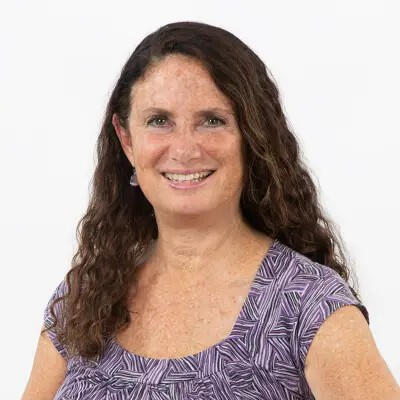
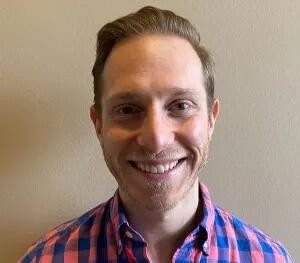
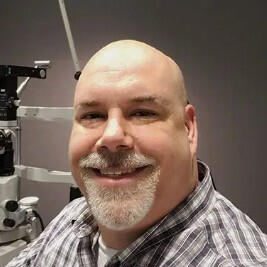
Our Team of Eye Doctors
Our practice is committed to bringing the latest in developmental optometry, eye disease, and ocular health management,
as well as a natural/holistic approach to eye care so each patient receives the care they deserve for their best vision possible.
Dr. Randy Schulman and our other practitioners are published authors and speakers and are committed to excellence and
ongoing clinical research in the field of Optometry.







Connect with Us
For specific questions or inquiries about our myopia study, reach out to team@myopiastudyeca.com.